Feeding · Best of
Best Baby Food Makers 2026: 4 We'd Buy (and the $300 Smart Ones We'd Skip)
Affiliate-link notice. This page contains affiliate links to Amazon and other retailers. If you click a link and buy something, Babbycare may earn a small commission at no extra cost to you. We only recommend products we'd put in our own house. Full disclosure here.
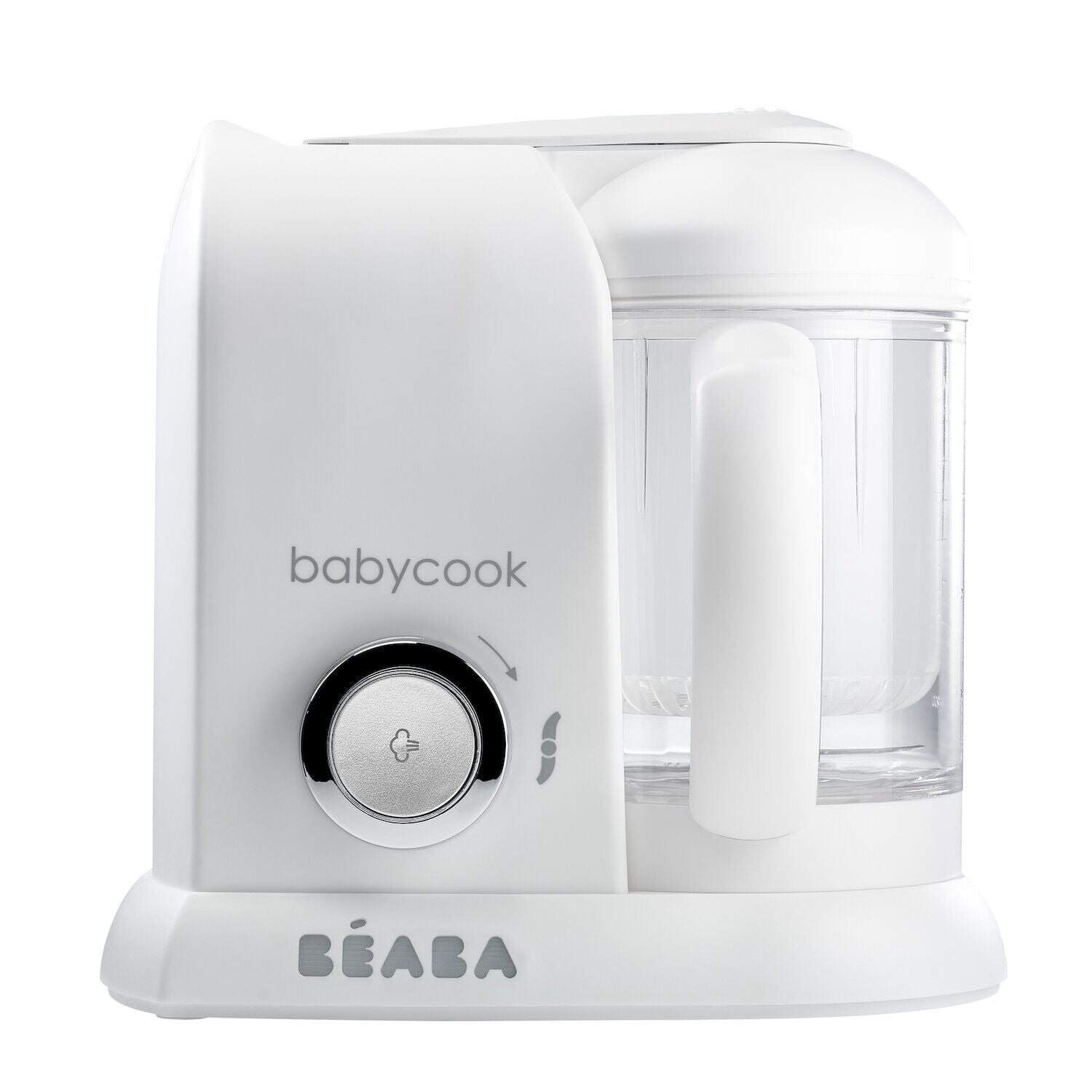
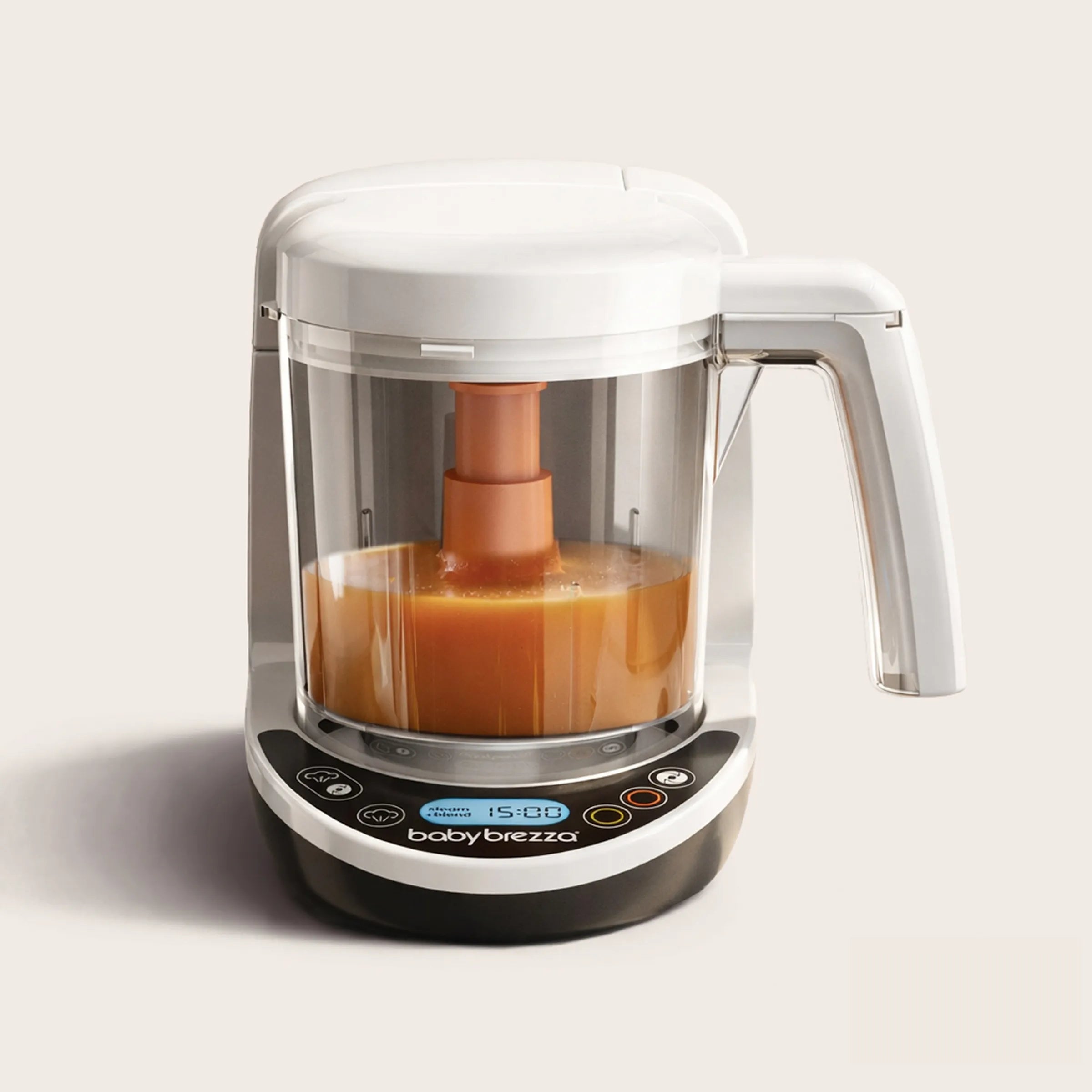
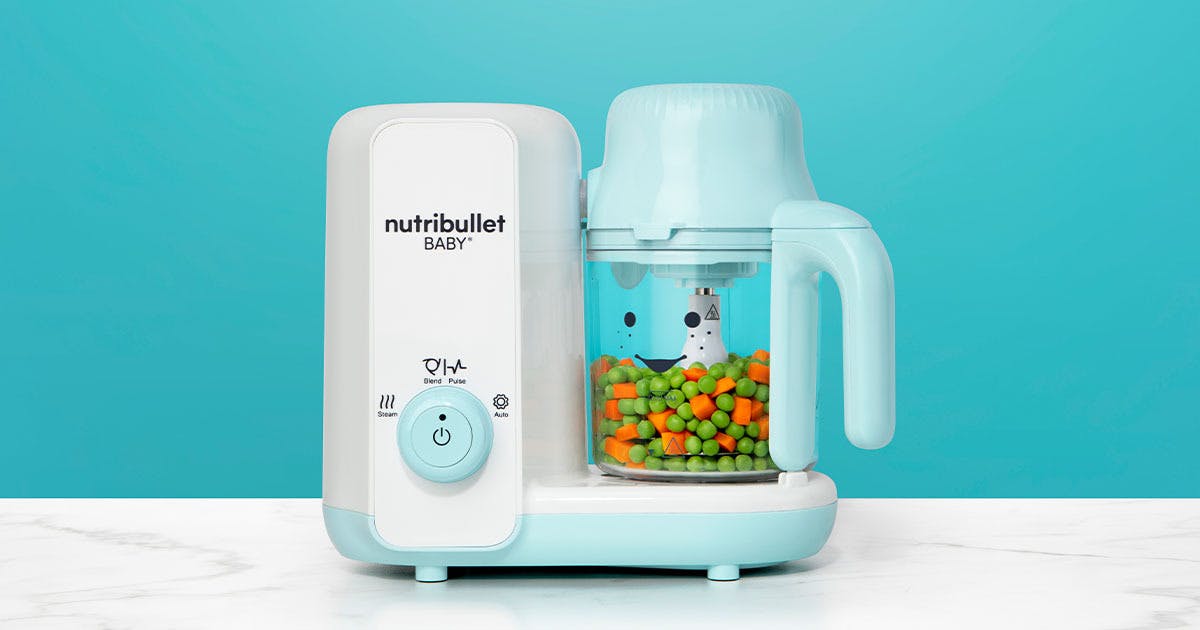
The three we'd actually buy: BEABA Babycook Solo, Baby Brezza One Step Deluxe, NutriBullet Baby.
Our daughter turned six months on a Tuesday. By Friday Mia had blended her first sweet potato through a Vitamix that was meant for adult smoothies, and by Saturday she was ordering a dedicated baby food maker because the steam-transfer-blend-wash cycle on the Vitamix had taken 40 minutes and produced food we then immediately gave to a baby who held it in her mouth for nine seconds before letting it slide back out.
The actual question this article exists to answer is: is a $170 single-purpose appliance worth it for a phase that lasts 6-9 months? Sometimes yes, sometimes no. We reviewed four worth buying, plus the category we would actively avoid, with one criterion most reviews miss: which one survives the moment when the partner who was excited about homemade purée gets tired by week three and starts using the jars again.
The short version
- Best overall for daily use: BEABA Babycook Solo — $170. The world's best-selling baby food maker, 4.7 stars across 4,000+ reviews. Steam + blend in one bowl, 4.5-cup capacity, dishwasher safe.
- Best truly hands-off: Baby Brezza One Step Deluxe — $150. Auto-shutoff steam-then-blend cycle in literally one button. Ships with 3 reusable pouches.
- Best for twins or batch-cookers: BEABA Babycook Duo — $230. Two 4.5-cup bowls, 9.1 cups total. The capacity is genuinely needed if you batch-cook a week of food on Sunday.
- Best budget if you already own a steamer: NutriBullet Baby Steam + Blend — $80. The "I do not need a $170 single-use appliance" answer.
- Skip: $300 AI-marketed "smart" food makers, sub-$30 generics, and treating your Instant Pot as the same thing. We explain below.
BEABA Babycook Solo — best overall
The BEABA Babycook Solo has been the default recommendation in baby food maker coverage for over a decade. It is a single bowl, a single button, a single sealed cycle: steam at 100°C for 15-20 minutes (you set the time based on the ingredient), then twist a dial to blend the steamed food in the same bowl. 4.5-cup capacity is enough for 27 servings in a single batch, which is roughly one week of food for one baby.
What works. Reliability is the BEABA's actual moat. The same machine runs through multiple kids in families we know. Reviews from 2014 still describe units that work fine. The steam basket lifts cleanly into the blender bowl so there is no hot transfer step (the one that burns parents using a stovetop steamer plus a separate blender). Cleaning is two parts in a dishwasher. The water reservoir holds enough for a full steam cycle without refilling. The shape is small enough to live on a counter without taking the place of the toaster.
What doesn't. The blade is sharp and the bowl is unforgiving if you pulse-blend with too much liquid (you will spray the kitchen). The included recipe booklet is French-rooted and uses metric, which is mildly annoying. The water reservoir has a hard-water residue problem in some US cities; the manual recommends a monthly vinegar descaling that most users skip until the steam stops working properly.
Couple-specific note. The Babycook is the appliance that survives the week-three motivation drop. The Vitamix hack and the stovetop-steamer hack both rely on the parent staying motivated; the BEABA reduces the activation energy enough that the partner who said they would make all baby food and the other partner who quietly doubted that promise actually meet in the middle.
Baby Brezza One Step Food Maker Deluxe — best truly hands-off
The Baby Brezza One Step Deluxe is the Babycook with one philosophical difference: it runs the steam cycle and the blend cycle automatically as a single sequence. You add the food, add the water, press one button, and walk away. The Babycook requires you to come back, lift the steam basket, and press blend. For the parent who wants to use the 18 minutes of steaming to feed the baby breakfast on the other side of the room, that difference is real.
What works. The set-it-and-forget-it design is genuinely the killer feature. The included reusable pouches (3 in the box) solve the storage problem simultaneously, which is the kind of small-system thinking that saves an extra shopping trip. Glass bowl option is available for $20 more if plastic-around-hot-food is a concern (the bowl is BPA-free either way; this is for the parents who do not trust BPA-free claims at all).
What doesn't. The blender component is meaningfully weaker than the Babycook. Some reviewers report fibrous foods (sweet potato skins, green beans) are not pulverized as smooth, requiring a second blend cycle. Capacity is smaller than the Babycook Solo (3.5 cups versus 4.5). The motor is reported as louder. Long-term reliability data thinner; the model has been on shelves for fewer years than the Babycook.
Couple-specific note. If one of you would actually like to be on the floor with the baby instead of standing at the counter for 18 minutes, the Brezza wins. The Babycook is for the partner who likes the small mid-morning ritual of checking on a steaming pot.
BEABA Babycook Duo — best for twins or batch-cookers
The Babycook Duo is the Solo with twice the capacity, in the form of two parallel bowls instead of one. 9.1 cups total. You can steam two different ingredients simultaneously (sweet potato in one bowl, peas in the other) or run twice the volume of one ingredient. The footprint is roughly 1.7x the Solo, not 2x; the bowls share a common control panel.
What works. For twins, or for the parent who really does want a week of food in one Sunday session, this is the only product on the list that can do it without a second-round batch. Same reliability profile as the Solo (4.7 stars, same brand DNA). The two-bowl design also means you can cook one batch for the 6-month baby and a different (less puréed) batch for the 14-month baby in the same session, which is the use case for spaced siblings.
What doesn't. $230 is hard to justify for a single-baby parent who will not batch-cook past month nine. The footprint is real; this needs counter real estate. If you only need single-bowl capacity 90% of the time, the second bowl becomes the appliance feature you bought and stopped using.
NutriBullet Baby Steam + Blend — best budget
The NutriBullet Baby Steam + Blend is the half-price version of the BEABA. Steam, blend, and pulse functions in one bowl. Smaller capacity than the Babycook (about 2.5 cups). The blender is the same NutriBullet motor people use in their adult kitchens, which is genuinely powerful for the price.
What works. If you already trust the NutriBullet brand from making smoothies, the Baby version is the same engineering at smaller scale. The price is the appeal: $80 for an appliance you will use for 6-9 months is much easier to justify than $170. The blade is more aggressive than the Babycook's, which actually handles fibrous foods (sweet potato skin, broccoli) more smoothly.
What doesn't. The capacity is the trade-off. 2.5 cups is one or two meals, not a week. If you batch-cook on Sundays, this is the wrong product. Build quality is fine but not BEABA-level; the warranty is 1 year versus BEABA's 2. The steamer reservoir is shallower and refills more often during a single session.
Couple-specific note. This is the right answer for the couple where one partner is excited about homemade purée and the other partner suspects this phase will not last. $80 sets the activation cost low enough that abandoning it midway does not hurt much. If you turn out to be a daily user, you can step up to the BEABA on month four.
What we'd skip and why
$300+ "smart" / AI-marketed food makers. A few products in the space charge $250-350 for what they describe as smart, app-connected, or AI-recommended baby food makers. The actual function is identical to the BEABA: steam a vegetable, blend the steamed vegetable. The "smart" features are typically a preset recipe library (you can Google these) and a Bluetooth log of how many batches you have made (you do not need this). Pay for the BEABA's 10 years of reliability, not the marketing.
Sub-$30 generic Amazon brands. Browse the Amazon "baby food maker" category sorted by price and you will find products under $30 with four-star averages. Almost universally, the reviews report the heating element dying within 6 months. For a 9-month phase, you will go through two of them and spend more than one BEABA.
Treating your Instant Pot as the equivalent. An Instant Pot can steam vegetables, and an immersion blender can purée them. This is a legitimate frugal hack. What it is not is the same workflow as a dedicated maker: there is one extra transfer step, the cleanup is two appliances instead of one, and the Instant Pot becomes unavailable for adult cooking during baby-food sessions. If you batch once a week, the Instant Pot is fine. If you cook daily, the dedicated maker pays off in time saved.
Multi-stage "feeding system" bundles. Some brands sell food maker bundles that include a dozen storage containers, four kinds of spoons, a bib, and a cookbook for $250. The food maker is identical to the standalone version. The bundle is markup wearing a costume. Buy the standalone unit; buy storage separately based on what you actually use (silicone freezer trays plus reusable pouches is the right answer most months).
How to actually decide
- How often will you actually make homemade purée? Daily or near it for 6 months: BEABA Babycook Solo ($170). 2-3 times a week with pouches filling in: NutriBullet Baby ($80). Sundays only with a freezer batch: NutriBullet Baby or Instant Pot + immersion blender.
- Do you have twins, or do you want one Sunday to feed the week? BEABA Babycook Duo ($230). Otherwise the single Solo is enough.
- Do you want the cycle to run without you? Baby Brezza One Step Deluxe ($150). The 18-minute hands-off cycle is the actual feature you are paying for over the BEABA.
- Are you skeptical the homemade-purée phase will last? Start with the NutriBullet at $80. If you become a daily user, upgrade to BEABA at month four and sell the NutriBullet on Facebook Marketplace for $40.
FAQ
When do babies start solids and how long do you actually use a baby food maker?
Around 6 months by current AAP guidance, sometimes earlier per pediatrician direction. The intensive baby-food-maker window is roughly 6-14 months, the purée and early lumpy textures stage. After 14-16 months most kids transition to family food cut small, and the maker shifts from daily use to weekly. So you are buying for a 6-9 month intensive period.
How is a baby food maker different from a regular blender?
It steams the food first, in the same bowl, then blends. A regular blender does the blending half, but you still need a separate steamer (stovetop pot, Instant Pot, or microwave) and a transfer step. The combined appliance saves the transfer step and one dish per batch.
Is the BEABA actually worth $170 over a $80 NutriBullet?
If you plan daily purée for 6-9 months, yes. Reliability is the BEABA's differentiator; the unit lasts across multiple kids. If you will make purée 2-3 times a week and supplement with pouches, the NutriBullet is fine and saves $90.
Pouches versus containers?
Containers for fridge (3-4 day window), pouches or freezer cubes for freezer (3-month window). Reusable pouches like the ones Baby Brezza ships with are the most useful innovation in the category. Silicone freezer trays with 1 oz cubes are the better long-term storage; once frozen, transfer cubes to bags and the tray is freed.
Can I just use my Instant Pot or a regular steamer?
Yes. Instant Pot + immersion blender produces identical output. The trade-off is extra steps and extra cleanup. At 5 batches a week over 9 months, that is roughly 200 extra transfers and 200 extra dishes. Whether that is worth $150 to you is a real personal call.
Babbycare is a small site written by Sam & Mia. We earn affiliate commission on purchases through our links, at no extra cost to you. We have used the BEABA Babycook Solo across both babies; the Brezza, Duo, and NutriBullet we synthesized from published reviews, manufacturer specs, and conversations with two couples who used each for at least six months. Read more about how we research and how we make money.