Sleep · Best of
The Best Baby Sound Machines for Tired Couples (2026)
Affiliate-link notice. This page contains affiliate links to Amazon and other retailers. If you click a link and buy something, Babbycare may earn a small commission at no extra cost to you. We only recommend products we'd put in our own house. Full disclosure here.


Top three picks at a glance: Hatch Rest, Yogasleep Dohm Classic, LectroFan Classic.
Most sound-machine roundups are written for the parent, treating the baby as the only sleeper in the room. The under-discussed truth is that two adults are usually sleeping in the same room, or just down the hall, and the machine that helps the baby may also help the two of you stay asleep when one of you twitches at 3 a.m. — or it may push one of you toward earplugs and a divorce attorney.
We picked six machines (and one set of earplugs, because for some couples the right answer isn't "more sound machine"). Here is what we'd buy, what we'd skip, and how to decide between them when the two of you have different relationships with noise.
Quick picks
- Best all-rounder: Hatch Rest 2nd Gen — $80. Sound + nightlight + alarm + app. Scales from newborn through age 8.
- Best budget: Yogasleep Dohm Classic — $49. Mechanical fan, indestructible, no app, sounds like a real fan because it is one.
- Best for travel: Yogasleep Hushh Portable — $26. Pocket-sized, USB-rechargeable, stroller-clip.
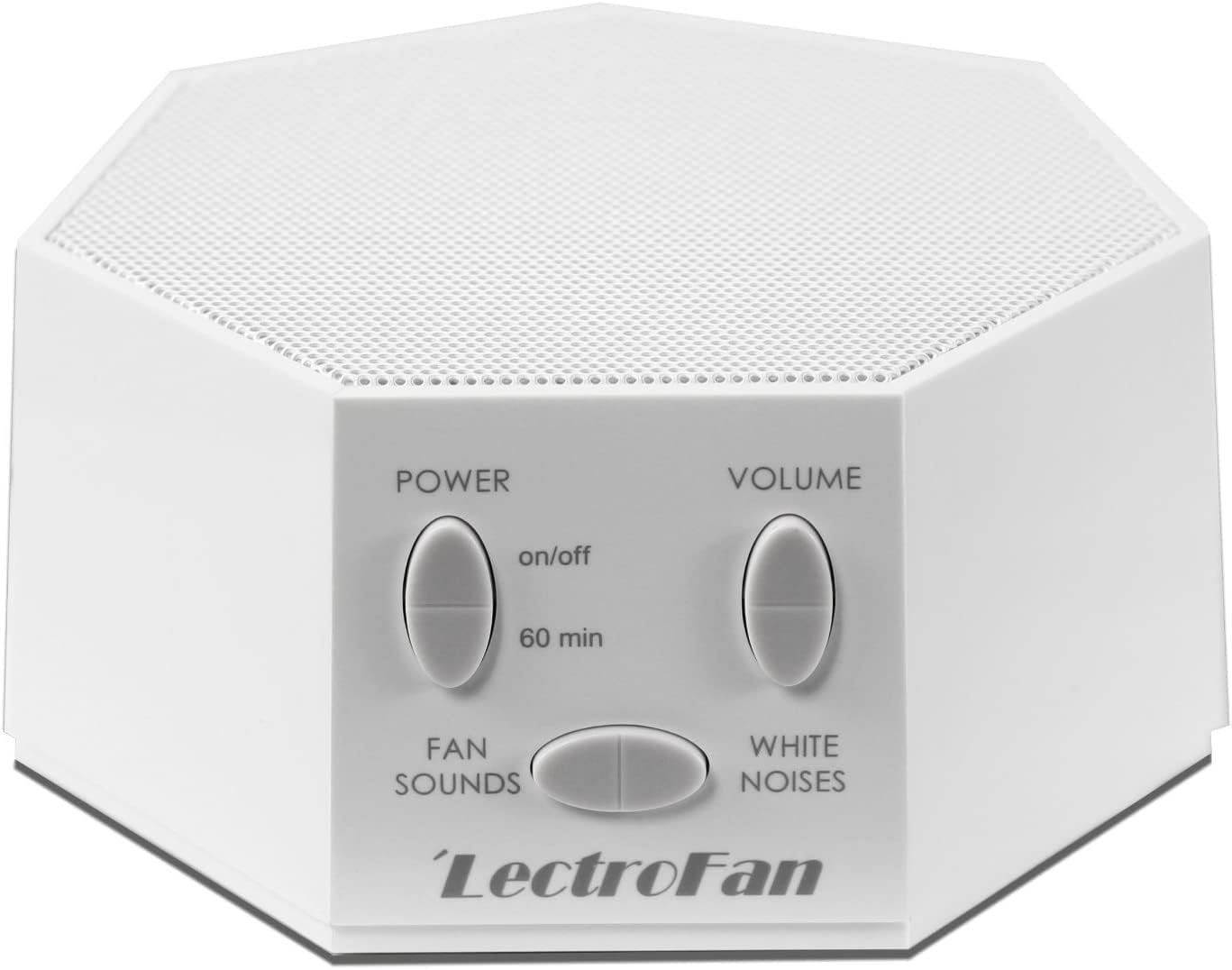
- Best sound quality: LectroFan Classic — $55. Non-looping algorithm, no app dependency, audiophile-grade for the price.
- Best on a tight budget: Dreamegg Portable Sound Machine — $20. 21 sounds, decent build, Amazon's Best Seller in sound therapy.
- For mismatched-noise couples: Loop Quiet 2 earplugs — $25. The cheap fix when one partner needs silence and the other needs masking.
- Skip: generic Amazon-brand fan-only machines under $15 (we explain below).
Hatch Rest 2nd Gen — best all-rounder
The Hatch Rest is the sound machine that gets recommended to every new parent for a reason. It's a sound machine, a nightlight, an alarm clock, and a "time to rise" toddler trainer in one device. The 2nd-generation model added Wi-Fi and app control, which most reviews see as a feature and a few see as a complication.
What works: the volume range goes lower than most machines, which matters when you're placing it in a small room with a baby. The amber nightlight at low brightness genuinely doesn't disturb sleep the way most LED nightlights do. The "time to rise" green-light feature becomes useful around month 18 when toddlers start getting out of bed at 5 a.m. and you can teach them "wait for the green light." Multiple Reddit threads describe this as "worth the price tag on its own."
What doesn't: Hatch released a subscription tier (Hatch+) in 2022 that gates premium sounds and meditations behind a $5/month fee. The base machine still works fine without it, but the subscription messaging in the app is annoying. There's also no battery — it's plug-in only, which makes travel a separate purchase (the Hushh, below). Some Amazon reviews report Wi-Fi pairing issues; most resolve with a router restart.
Couple-specific note: the volume range is the key feature. We'd buy this for couples where one partner needs masking and the other needs the room dim — the gradual fade and dimmable nightlight together solve a problem most machines don't address.
Yogasleep Dohm Classic — best budget
The Dohm has been on the market in some form since 1962. It is mechanical: a literal fan inside an enclosed shell. There is no app, no LCD, no Wi-Fi, no USB. You turn it on with a switch, you adjust the tone with a rotating ring on the casing, and you adjust the volume by twisting the cap. That's it.
What works: the sound is a real fan, which is what every digital "fan sound" track is trying to imitate and never quite manages. There's no looping (because there's nothing to loop). It is borderline indestructible — Amazon reviews going back a decade consistently report owners using the same unit for their second and third kids.
What doesn't: one sound, only. If you wanted ocean or rain or pink noise, this isn't that machine. The volume at full crank is loud — fine for a separate nursery, less fine if it's three feet from your bed. There's no auto-off timer, which most adults will not care about (you want it running all night) but some will.
Couple-specific note: this is the machine for the partner who has been pushed past patience by baby tech. There is nothing to update, nothing to charge, nothing to pair, nothing to subscribe to. It works the same way an old fan works, because it is one.
Yogasleep Hushh Portable — best for travel
The Hushh is roughly the size of a hockey puck. Three sounds (white, pink, gentle surf), three volume levels, USB-charged, runs about 10 hours between charges. There's a stroller clip on the back that fits most stroller bars and pack-n-play rails.
What works: it travels. We mean this literally — it's the machine reviewers actually take on planes, fits in a diaper bag pocket, and works in hotel rooms where you can't hear the AC drown out the hallway. The clip is more useful than it sounds for stroller naps when ambient city noise is the problem.
What doesn't: it's smaller, so the maximum volume is meaningfully lower than a full-size machine. Limited sounds (no rain, no fan-fan). The lock button is fiddly and gets pressed accidentally if it's loose in a bag. Battery life claims overstate reality by an hour or two.
Couple-specific note: this is most useful as the second machine. Most tired couples end up with a primary at home and a Hushh in the diaper bag for everywhere else.
LectroFan Classic — best sound quality
Adaptive Sound Technologies' LectroFan generates its sounds algorithmically rather than looping pre-recorded clips. For most listeners this means nothing; for the 10-15% of adults whose brains catch the loop point on cheaper machines, it means the difference between sleeping and not sleeping.
What works: ten fan sounds and ten white-noise variants, none of which loop. Volume range is wide. Built solid. No app, no subscription. Wirecutter has named this their sound-machine pick on and off for years.
What doesn't: no nightlight, no clock, no kid-aging features. If you're buying a sound machine to be a single piece of nursery infrastructure, the Hatch Rest is more flexible. The LectroFan is a sound machine, full stop.
Couple-specific note: this is the one for the partner who has tried two other machines and complained that the loop is audible. Algorithmic generation usually solves that.
Dreamegg Portable Sound Machine — best on a tight budget
The Dreamegg is the most-reviewed sub-$25 sound machine on Amazon and currently sits as Best Seller in Sound Therapy Products. 21 sounds (white/pink/brown noise, fan, ocean, rain, lullabies), timer, USB-rechargeable battery for portability, basic nightlight. The original "Letsfit" budget pick we'd recommended in earlier drafts has been delisted on the US store; Dreamegg is the same shape of product with better build feedback.
What works: the sheer number of sound options is useful in the first six months when you're figuring out what your specific baby finds soothing. The internal battery means you can keep it running through a power blip without it resetting and waking the room. Most parents converge on one or two presets within a month, but having 21 to experiment with is a feature.
What doesn't: the loop is audible on some white-noise tracks (a known limitation of any sample-based machine; the LectroFan above solves this algorithmically). Build is plastic. A small fraction of reviews report units dying after 12-18 months — possible at this price point.
Couple-specific note: best fit when budget is the constraint and a 25% chance of replacement in two years is acceptable. If you have $50 to spend, the Dohm or LectroFan are more durable buys.
Loop Quiet earplugs — for mismatched-noise couples
We're including this because no list of sound machines for couples is honest without acknowledging that for about a third of couples, the answer isn't a sound machine — it's earplugs for the partner who can't sleep through a sound machine, while the other partner gets the masking they need.
What works: 26 dB of attenuation. Reusable silicone. Comfortable enough for side sleepers. The Quiet 2 redesign (2023) addresses the main complaint about the original (the older ones popped out for some ear shapes).
What doesn't: not all ear canals fit them comfortably; about 10-15% of users return them. They reduce, not eliminate, baby noise — meaning the partner wearing them will still hear a real cry, just not every soft rustle. This is a feature, but worth knowing.
Couple-specific note: this is the most underrated solution to a couples-with-baby sleep problem. If you've fought about the sound machine volume for six months, try this.
What we'd skip and why
Generic sub-$20 fan-only machines. Amazon is full of off-brand machines under $20 with 4-star average ratings. Almost universally, the reviews describe build issues showing up after 6-12 months — the motor whines, the casing cracks, the timer fails. Buying two of these in 18 months costs more than a single LectroFan. The exception is the Dreamegg above, which has enough scale and review volume to maintain semi-consistent QC.
Sleep-aid speakers that pair to your phone. A few products in the space are essentially Bluetooth speakers marketed as sound machines. The problem: they require your phone in the room, which means notifications and screen glow have to be managed every night. A dedicated machine sidesteps the whole category of "did you remember to put your phone on do-not-disturb?" relationship moments.
Bose Sleepbuds II. Discontinued in 2023 after persistent battery issues. If you find them on resale, the firmware support is also winding down. Skip.
How to actually decide
The framework that worked for us, and most of the couples we know:
- Are you a single-machine, single-room household, or multi-machine? If the baby has its own room and you're at the other end of the house, you can buy a louder, simpler machine without worrying about your own sleep. If you're in the same room or adjacent — especially in a small apartment — get a machine with a real low end on the volume range (Hatch, LectroFan).
- Does either of you have a "the loop is audible" problem? If yes, budget for non-looping (LectroFan) or mechanical (Dohm). If you've never noticed a loop, any digital machine works.
- Is one partner clearly more noise-sensitive than the other? If yes, consider the Loop earplugs in addition to (not instead of) a sound machine. Spending $25 on this small problem is the highest-ROI sleep purchase you'll make.
- Do you travel with the baby? Add the Hushh to whatever home machine you pick. Trying to use a single device for both is a worse experience than $30 of redundancy.
FAQ
Are sound machines safe for newborns?
Yes, with two caveats. Place the machine at least 7 feet (2 meters) from the crib — this is the AAP recommendation, derived from a 2014 study on noise exposure. And run it at a volume below 50 dB, about the level of a quiet conversation. The risk is around long-term high-volume exposure, not the machine itself.
White noise vs pink noise vs brown noise — does it matter?
Pink noise (lower frequencies emphasized) is closer to the in-utero sound babies are conditioned to than pure white noise. Brown noise emphasizes the low end even more and tends to be more comfortable for adults to sleep through. For couples in the same room, brown noise is usually the default. Most modern machines offer all three.
Should we use it all night or just for sleep onset?
All night, in our experience and most pediatric sleep guidance. The noise you're managing isn't sleep onset (most babies fall asleep fine in quiet) — it's the mid-night noise that triggers micro-wakings: a partner's phone, a flushed toilet, the dog. Without continuous masking, every random sound resets the sleep cycle.
When should we stop?
There's no medical reason to. Many adults use sound machines indefinitely, and the same machine can travel with your kid into their teen years. The only consideration is whether the machine has become a sleep crutch in places it can't go (a relative's house, a hotel room) — which is why we suggest having a portable Hushh available as backup.
Babbycare is a small site written by Sam & Mia. We earn affiliate commission on purchases through our links, at no extra cost to you. We have not put every product in our home; this roundup synthesizes published reviews, manufacturer specs, and our experience as a couple raising a young child. Read more about how we research and how we make money.